Tea Leaves: a memoir by Janet Mason -- check out Janet Mason's author blog
Tea Leaves podcast review by Gordon Wilson of Joy 94.9 (a gay and lesbian radio station in Melbourne, Australia)
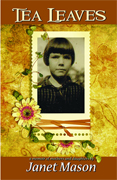 Tea Leaves is a heartbreaking story of loss and at the same time a fierce and jubilant tribute. It reminds us of the way as daughters our accomplishments are always entangled in our mother’s disappointed dreams. As Janet Mason reveals the legacy of frustration, shame and rage that passed like an unspoken heirloom through generations of her working-class family, she also uncovers a stubborn, bright hope, and a keen sense of injustice, that are equally her inheritance. This vivid and moving memoir leaves us knowing that Mason’s dialogue with her mother will go on forever and will continue to transform her, in the way we are all continually in conversation – painful and liberating – with the past.
-- Karen S. Mittelman, author/historian
Tea Leaves: a memoir is now available from Bella Books
Tea Leaves in the news --West Mt. Airy Neighbors’ News Collingswood Patch Mt. Airy Patch NewsWorks Chestnut Hill Local ....Review by Amos Lasson
Philadelphia Gay News....The Huffington Post...Pridesource.com --- Book Marks nationally syndicated column from Richard Labonte Excerpt from Tea Leaves in SheWired (powered by Advocate)
TEA LEAVES has been chosen by American Library Association's "Over the Rainbow" 2013 list of notable LGBT Books!
Read Janet Mason's How Caring for My Mother Brought Me Into the LGBT Caretaker Club: A SAGE Experience in The Huffington Post
Tea Leaves selected by the Lambda Literary Foundation for a bookclub of the month selection -- click here for Reader's Guidelines
Tea Leaves reviewed in the Windy City Times, click here
Janet Mason, a second generation feminist, intimately explores the paradoxical legacies of family and culture. Any woman who has borne witness to the passing of her mother will be moved by this account and any woman who has yet to face this life-changing transition will be illuminated and directed, as if by a map. ---Sheila Ortiz Taylor Janet Mason writes regret with power. Whether this arduous journey is before or behind you, you'll recognize the visceral fear of loss and the longing for peaceful passage. ---KG MacGregor "Lives are cyclical and while we do not always pass through the same circles, there are always points that meet, converge and separate constantly. There is something here for everyone who has ever loved someone else or plans to. I highly recommend Tea Leaves just because it is so real and so beautifully written." --Amos Lassen
Tea Leaves is a lesbian-telling of the story of mothers and daughters, embarking when the narrator’s mother is diagnosed with fourth stage cancer. A dutiful daughter, the narrator proceeds to take care of her mother, 74-year-old Jane, and enters a deeper understanding of her own life through her mother’s stories. Her grandmother (born in 1899) was a spinner in a textile mill and white glove wearing lady of her generation, her mother (born in 1920) was an office worker and feminist ahead of her time. The narrator has taken the foundation of her mother’s life and forged her own – taking her mother’s feminism one step further in becoming a lesbian and becoming the first in her family to graduate from college. Tea Leaves is a story of gender and class, identity and sexuality but, most of all, it is about love. Excerpts of Tea Leaves have been published in Mom, Alyson Books; The Advocate; Telling Moments: Autobiographical Lesbian Short Stories, University of Wisconsin Press; and Dutiful Daughters: Caring for Our Parents as They Grow Old, Seal Press; and Sinister Wisdom (Issue Number 68/69 -- Death, Grief and Suffering.)
|
Tea Leaves -- excerpt -- Chapter One
published in 2012 by Bella Books
amusejanetmason.com
“Your Grandmother read tea leaves.”
Startled, I looked up at my mother, sitting in her gold velour chair next to the end table scattered with a few library books. From my mother’s lips, this statement was a bad omen. My atheist, bible-burning, skeptical-of-anything-less-than-scientific mother had long been a woman who believed in nothing.
Superstition—even applied to a previous generation—was not admissible.
“What did she see?”
“Her own face, probably.” My mother shrugged. “I made fun of her and told her that she was old fashioned and superstitious. Eventually, she stopped talking about it.”
I stopped to ponder this sliver passed to me about my Grandmother, my mother’s mother, who died when I was twelve. I was thirty-four years old, and this was the first time my mother told me that my Grandmother read tea leaves.
“Did she read them often?”
“I don’t know. Often enough, I guess. She used to read cards, too—ordinary playing cards. She would take them out from the deck and lay them out on the wooden table we had in the kitchen. An ace of hearts good luck, an ace of spades death.”
A cold shudder punctuated the end of her sentence.
My mother was 74, the same age as my Grandmother when she died.
My mother’s matter of fact tone and my diversion into my Grandmother’s tea leaf reading traditions did nothing to alleviate the direness of my visit. I came immediately after I found out she had woken up a few days ago with a crushing pain on her sternum. “I felt like I was having a massive coronary,” she told me later. My mother—who never believed in doctors—went to one immediately. He ordered some X-rays, told her it was arthritis, and sent her home with some extra strength Tylenol. When she told me this, my mind reeled. This was my mother—someone who walked four miles a day.
“Why didn’t you call?” I had asked her on the phone.
“I just did,” she had replied.
I didn’t argue, but the fact was that I had called her. There was something in her voice I had never heard before. Fatalism. This dead-end tone of voice coming from my mother pushed me to panic. Illness or not, I couldn’t conceive of her coming to a standstill. My mind raced. I thought there must be something that I could do.
“There are special diets for arthritis,” I had told her. “Let me stop at the health food store and I’ll be right over.”
At the same time that I leapt to action, the center of me came to a quiet standstill.
Silence boomed.
The bottom of my world began to drop away.